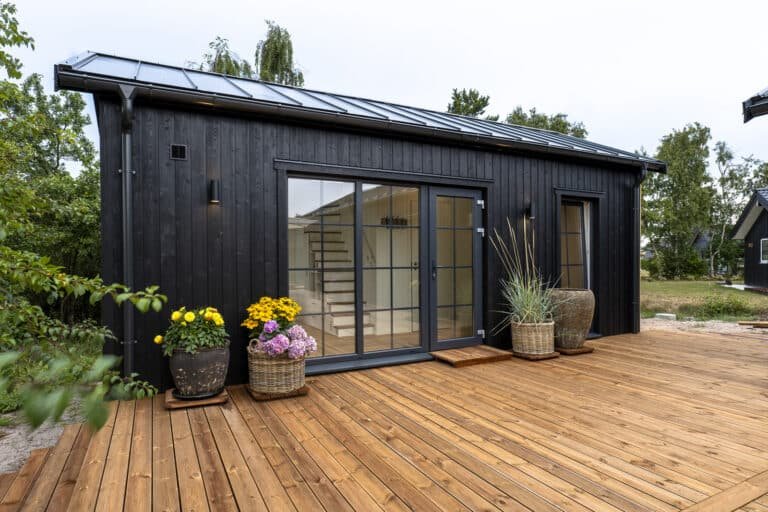
45sqm planning exempt modules are becoming an increasingly attractive solution for homeowners in Ireland who want extra space without the delays and costs of traditional construction. For mortgage holders, they can offer a practical way to add value, improve living conditions, and create flexible accommodation on an existing site.
These compact modular units are especially appealing because they may, in the right circumstances, fall within planning exempt development rules. That makes them faster to deliver and potentially simpler to deploy than a conventional extension or new build. For many Irish homeowners, that combination of speed, affordability, and flexibility is hard to ignore.
What Are 45sqm Planning Exempt Modules?
A 45sqm planning exempt module is a prefabricated or modular structure designed to be installed on a property without full planning permission, depending on site conditions and local rules. These units are typically used as ancillary accommodation, home offices, guest space, or independent living areas.
The key advantage is that they can often be installed more quickly than a traditional extension. Because they are built off-site, the construction process is more controlled, less disruptive, and usually more efficient. That makes them an appealing option for homeowners who need additional space but do not want a long and complex build.
It is important to remember that “planning exempt” is not automatic. The exemption depends on factors such as use, size, location, height, and whether the unit is attached to the principal dwelling or used as separate accommodation.
Why They Appeal to Mortgage Holders
For mortgage holders in Ireland, 45sqm planning exempt modules can be especially useful because they may help improve a property without the same level of financial strain as a major extension or second property purchase. Instead of moving house or taking on a more expensive build, the homeowner can improve the value and functionality of the existing asset.
This can be attractive for families needing more room, homeowners creating space for parents or adult children, or buyers who want to future-proof their home. In many cases, the unit may also enhance the property’s overall market appeal, which is important for long-term equity.
There is also a practical cashflow advantage. A modular solution can often be planned with more certainty around cost and timeline than conventional construction, helping mortgage holders avoid unexpected overruns.
Financial Benefits
A major reason mortgage holders consider this type of module is the potential to add value in a controlled and efficient way. A well-designed 45sqm unit can make a home more adaptable for changing family needs, which may support stronger resale demand later.
The financial benefits often include:
- Lower build disruption compared with a traditional extension.
- Faster installation, which can reduce temporary accommodation or interim costs.
- More predictable budgeting because the unit is manufactured off-site.
- Potential uplift in property usability and perceived value.
For some homeowners, the module can also reduce the need to move to a larger property, which may avoid higher purchase prices, solicitor fees, stamp duty, and other transaction costs.
Practical Uses for Irish Homes
These modules can serve a wide range of uses, depending on the layout and local requirements. Common examples include:
- A self-contained space for elderly parents.
- A private unit for adult children returning home.
- A home office or remote working space.
- Guest accommodation.
- A flexible family room or secondary living space.
In Ireland, this flexibility is a major advantage. Many households are looking for solutions that adapt to changing family structures, work patterns, and lifestyle needs. A 45sqm module gives that flexibility without requiring a full-scale redevelopment.
Why Planning Exemption Matters
Planning exemption is one of the main reasons these modules are so appealing. If a project qualifies, it may avoid the time and uncertainty associated with a full planning application. That can make the process more straightforward for homeowners and lenders alike.
For mortgage holders, speed matters. Delays can create pressure on budgets and household arrangements. A planning exempt option can reduce that friction and allow the homeowner to proceed with more confidence.
That said, homeowners should always verify the exemption criteria before proceeding. Irish planning rules can vary depending on the site, the county, and the intended use of the unit.
Mortgage Holder Considerations
Mortgage holders should think carefully about how the unit will affect both the property and the mortgage arrangement. Some lenders may view a high-quality modular addition positively if it improves the property’s function and value. Others may want clarity on whether the unit is permanent, compliant, and properly connected to the main dwelling.
Important factors to consider include:
- Compliance with Irish planning and building requirements.
- Whether the module is attached, detached, or ancillary.
- How the unit may affect property valuation.
- Whether lender consent is needed before installation.
- The quality of design, insulation, and finish.
In practice, a well-built, compliant module is far more likely to be seen as an asset than a liability. For mortgage holders, the key is to treat it as a property improvement, not just a temporary structure.
Design and Build Quality
A 45sqm module needs to be carefully designed to make the most of its footprint. Good natural light, efficient storage, open-plan layouts, and proper insulation all play a big role in making the space feel comfortable and usable.
For Irish conditions, energy performance is particularly important. A module with strong insulation, airtight construction, and quality windows can help reduce running costs and improve year-round comfort. That is especially valuable for homeowners thinking long term.
High build quality also supports better resale appeal. Buyers and lenders are more likely to respond positively to a unit that feels integrated, durable, and professionally finished.
Conclusion
45sqm planning exempt modules offer a practical, flexible, and potentially cost-effective solution for Irish mortgage holders. They can provide valuable extra space without the disruption of a traditional build, while also helping improve how a property is used and possibly increasing its appeal.
For homeowners who want to stay in place, support family needs, or add value to an existing property, these modular units can be a very smart option. The key is to ensure the project is compliant, well designed, and suitable for the property and mortgage structure.